20–50 Bed Hospital Ideal Layout: A Complete Guide by ACCO Construction (2025)
Introduction to ACCO Construction
ACCO Construction is Pakistan’s leading design-build company specializing in hospital planning, medical facility construction, turnkey healthcare infrastructure, MEP engineering, and high-performance building design. With more than 20 years of experience, ACCO has delivered multiple healthcare projects in Lahore, Karachi, Islamabad, Faisalabad, Multan, and across Pakistan.
Our specialized team includes:
Healthcare architects
Hospital MEP engineers
Medical planners
Structural engineers
HVAC & clean room specialists
Turnkey project management teams
ACCO Construction is headquartered in Lahore and is known for delivering modern, functional, and compliant healthcare layouts that meet international and Pakistan-specific standards.
Introduction to the Topic: 20–50 Bed Hospital Ideal Layout
A 20–50 bed hospital is one of the most in-demand healthcare facility types in Pakistan, especially in developing urban areas, district towns, and private healthcare sectors. These hospitals provide essential medical care without requiring large-scale infrastructure budgets.
Designing the ideal layout is critical because:
Hospitals must ensure smooth patient flow.
Medical staff need efficient working routes.
Emergency, OPD, IPD, and diagnostic areas must be strategically connected.
Compliance with Pakistan Health Infrastructure Guidelines is mandatory.
Patient safety, infection control, and hygiene standards depend on layout design.
In this blog, ACCO Construction provides a complete, professional, SEO-optimized guide to the perfect 20–50 bed hospital layout for entrepreneurs, investors, doctors, and healthcare organizations planning a new facility.
Understanding the 20–50 Bed Hospital Layout
The layout of a 20–50 bed hospital depends on:
Number of departments
Clinical functions
Type of services
Flow between units
Land size and location
Regulations by Punjab Healthcare Commission (PHC)
Budget and construction approach (PEB, RCC, or hybrid)
Below is a complete breakdown.
Core Components of a 20–50 Bed Hospital
1. Entrance & Reception Zone
A professional and functional entrance area includes:
Reception counter
Waiting lounge
Emergency access
Wheelchair access
Security/registration area
Pharmacy (optional)
Average area required: 700–1,200 sq ft.
2. Outpatient Department (OPD)
Typically includes:
4–10 consultation rooms
Triage room
Minor procedure room
Waiting area
Treatment room
Area requirement: 1,200–2,000 sq ft.
3. Emergency Department
For a 20–50 bed hospital, emergency is critical:
2–4 emergency beds
Trauma room
Resuscitation room
Doctor/nurse station
Separate entry
Area requirement: 800–1,200 sq ft.
4. Inpatient Department (IPD)
This includes:
20–50 beds
General ward
Semi-private rooms
Private rooms
Nursing stations
Storage
Clean/dirty utility
Area requirement: 5,000–8,000 sq ft depending on design.
5. Diagnostic & Imaging
X-Ray room
Ultrasound room
Mammography (optional)
CT scan (optional for 50 beds)
Area requirement: 1,000–1,800 sq ft.
6. Operating Theatre (OT) Complex
Standard OT block includes:
1–2 main OTs
1 minor OT
Scrub area
Sterilization
Recovery room
Nurse station
Anesthesia room
Area requirement: 1,500–2,500 sq ft.
7. Pathology Laboratory
Includes:
Sample collection room
Microbiology
Hematology
Biochemistry
Technician area
Area requirement: 600–900 sq ft.
8. ICU / HDU
For 20–50 bed hospitals:
2–6 ICU beds
4–8 HDU beds
Area requirement: 800–1,400 sq ft.
9. Maternity / Gynae Unit
Optional based on scope:
Delivery room
Labour room
Neonatal nursery
Waiting area
Area requirement: 1,000–1,500 sq ft.
10. Support Services
Kitchen
Laundry
Storage
Maintenance rooms
Staff lounges
Changing rooms
Server room
Admin offices
Area requirement: 1,000–2,000 sq ft.
Ideal 20–50 Bed Hospital Space Distribution (Table)
| Department | Recommended Area (sq ft) |
|---|---|
| Entrance + Reception | 700 – 1,200 |
| OPD | 1,200 – 2,000 |
| Emergency | 800 – 1,200 |
| IPD (wards/rooms) | 5,000 – 8,000 |
| OT Complex | 1,500 – 2,500 |
| ICU/HDU | 800 – 1,400 |
| Diagnostics | 1,000 – 1,800 |
| Lab | 600 – 900 |
| Gynae/Delivery | 1,000 – 1,500 |
| Support Services | 1,000 – 2,000 |
| Total | 13,600 – 22,500 sq ft |
For a multi-storey design (G+1 or G+2), this distribution becomes more efficient.
Key Principles for an Ideal Layout
1. One-Way Circulation Flow
Patients, staff, and supplies should never cross paths incorrectly.
Separate clean, semi-clean, and dirty zones.
2. Proximity Planning
Critical departments must be connected:
Emergency → Radiology
OT → ICU
OPD → Pharmacy
Lab → OPD
3. Infection Control
HEPA filtration in ICU/OT
Negative pressure in isolation rooms
Separate entry for emergency patients
Clean air conditioning zoning
4. Accessibility
Wheelchair ramps
6 ft minimum corridor width
Elevator for G+ floors
5. Compliance with PHC & WHO Guidelines
Fire exits
Proper ventilation
Waste management
Water quality
Medical gas system
Architectural Layout Example (ACCO Standard)
Ground Floor (Recommended)
Reception & waiting
OPD rooms
Emergency
Radiology
Pharmacy
Laboratory
Minor OT
First Floor
IPD (general ward + semi-private rooms)
Private rooms
ICU / HDU
Staff lounge
Second Floor (optional for 50 beds)
OT complex
CSSD
Delivery suite
Admin block
This arrangement supports efficient flow and minimizes travel time for staff.
Pros and Cons of a 20–50 Bed Hospital Layout
Pros
Low investment compared to 100–300 bed hospitals
Quick construction time (especially PEB structures)
High operational efficiency
Profitable for private healthcare owners
Ideal for urban and rural areas
Flexible expansion options
Cons
Limited specialized services
Requires strong planning to avoid congestion
Higher dependency on referral networks for complex cases
Requires qualified staff and ongoing operational costs
Frequently Asked Questions (FAQs)
1. What is the ideal size of a 20–50 bed hospital?
Total area usually ranges between 13,000–22,500 sq ft, depending on departments.
2. How many floors are required?
Most 20–50 bed hospitals are G+1 or G+2, depending on land size.
3. What is the minimum land requirement?
At least 10,000–15,000 sq ft for efficient planning.
4. How many OTs are needed?
1 main OT and 1 minor OT for 20-bed;
2 main OTs + 1 minor OT for 50-bed.
5. Does ACCO provide turnkey hospital construction?
Yes. ACCO provides design, drawings, MEP planning, construction, finishing, and equipment layout.
Internal Links (ACCO Website)
House Construction in DHA Lahore
Commercial Plaza Construction Lahore
Hospital Construction Services Pakistan
PEB Building Construction
MEP Engineering Services
(You can insert actual URLs when uploading to your website.)
External Links (High Authority Reference Sources)
Government of Pakistan Healthcare Guidelines (construction.gov.pk)
Punjab Healthcare Commission Standards (phc.org.pk)
WHO Hospital Planning Guidelines
ArchDaily – Healthcare Design Trends
DAWN News – Healthcare Infrastructure Reports
Final Verdict
A 20–50 bed hospital is the ideal size for private investors, healthcare entrepreneurs, and medical professionals looking to start a functional, profitable, and efficient medical facility in Pakistan. With the right planning, the layout becomes highly efficient, easy to manage, and scalable for future expansion.
ACCO Construction specializes in creating fully compliant, well-planned, and modern hospital layouts that support:
Patient comfort
Staff efficiency
Infection control
Fast construction
Long-term sustainability
If you are planning a 20–50 bed hospital, ACCO’s design-build expertise ensures your project meets both international standards and local regulatory requirements.
Call to Action (CTA)
Start your hospital project today with Pakistan’s leading construction company.
Contact ACCO for free consultation, drawings, and cost estimation.
📞 Phone / WhatsApp: +92 300 2358853
🌐 Visit: ACCO Construction Official Website

Diagnostic Lab & Collection Centre Setup Guide (Space, Cost, Licensing)
Lab collection centre setup in Pakistan: collection centre vs full lab, space, layout, lab sections, power and HVAC, indicative costs, licensing and common mistakes.

Elderly Care & Geriatric Facility Design in Pakistan
Elderly care facility design in Pakistan: facility types, fall prevention, resident rooms, dementia-friendly design, communal and cultural spaces, and healthcare support.
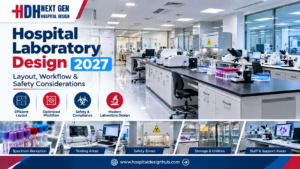
Hospital Laboratory Design 2027: Layout, Workflow & Safety Guide
< What Hospital Laboratory Design Really Involves Laboratory design sits at the intersection of clinical science, engineering, and regulatory compliance… The scope includes several interconnected elements… In Pakistan, the context adds specific demands… Designing for 2027 means anticipating trends… What

Hospital Kitchen & Laundry Planning: The Hidden Service Blocks
Hospital kitchen and laundry design: in-house vs outsourced, one-way workflow, zones, equipment, services, barrier washers, location and common mistakes.
Stroke Unit Design: Fast-Track Layout from ER to CT to ICU
Stroke unit design: fast-track pathway from ambulance to CT and treatment, acute stroke beds, rehabilitation spaces, accessibility and care models by hospital size.
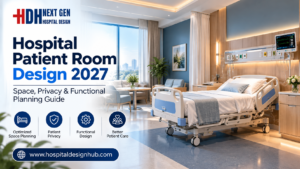
Hospital Patient Room Design 2027: Space, Privacy & Functional Planning Guide
Hospital Patient Room Design 2027: Space, Privacy & Functional Planning Walk through any older hospital in Lahore or Karachi and you will notice it immediately: curtained-off beds in crowded wards, bathrooms down the corridor, no space for a family member

RO Water Plant Design for Dialysis Units
RO plant for dialysis: pre-treatment, carbon filtration, single vs double-pass RO, distribution loop design, sizing, plant room, testing and common mistakes.

KP Healthcare Commission Requirements for Clinics & Hospitals
KP Healthcare Commission requirements for clinics and hospitals: what the standards cover, common gaps in converted premises, KP-specific design issues and a licensing checklist.

Case Study: UOL Hospital Lahore
What projects at UOL Hospital Lahore and other private university teaching hospitals involve: master planning, clinical expansion, MEP infrastructure and phased construction.

Modular OT Panels vs Conventional OT Construction
Modular operation theatres in Pakistan vs conventional OT construction: materials, HVAC and laminar flow, cost drivers, OT size, supplier questions and commissioning.

Hospital Medical Waste Area & Incinerator Room Design
Hospital waste management design in Pakistan: waste types, regulations, segregation, dirty utilities, waste routes, central store design and on-site treatment options.
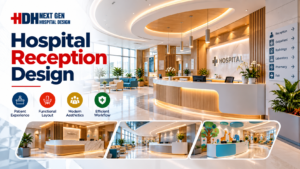
Hospital Reception & Waiting Area Design: Planning Guide for 2027
Hospital Reception & Waiting Area Design: 2027 Planning Guide Walk into any hospital in Lahore or Karachi and the first five minutes tell you everything. If the reception feels crowded, the signage confuses you, and the waiting chairs look like

MRI Room Design: RF Shielding, Quench Pipe & Magnet Delivery
MRI room design guide: scan, control and equipment rooms, safety zones, RF shielding, fringe field, quench pipe, structure, vibration, cooling and common mistakes.
Rented Building vs Purpose-Built Hospital: Which Is Right for You?
Rented building vs purpose-built hospital in Pakistan: cost, time, licensing, layout and lease risks compared, with a suitability checklist and a staged rent-then-build strategy.
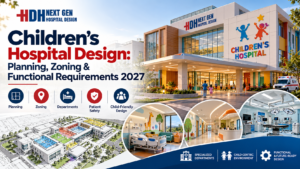
Children’s Hospital Design in Pakistan: Planning, Zoning & Requirements for 2027
Children’s Hospital Design in Pakistan for 2027 Building a hospital is complex. Building one for children is an entirely different challenge. In Pakistan, where healthcare demand is rising rapidly across cities like Lahore, Karachi, and Islamabad, the need for specialized

Sindh Healthcare Commission Licensing for New Hospitals
Sindh Healthcare Commission licensing explained for new hospitals and clinics: what the standards cover, how they affect design, readiness checklist and converting buildings in Karachi.
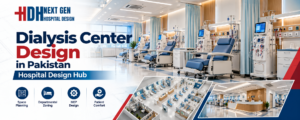
Dialysis Center Design in Pakistan | Hospital Design Hub
Dialysis Center Design in Pakistan: 2027 Planning Guide Imagine a patient in Lahore who needs haemodialysis three times a week, four hours per session, for years. The building they walk into every other day is not just a medical facility.
Burn Unit Design: Infection Control, Temperature & Layout
Burn unit design for Pakistani hospitals: burn ICU, wards, dressing and hydrotherapy rooms, burn OT, warm-room HVAC, infection control, capacity and common mistakes.

Case Study: KEMU / Mayo Hospital Works by Hospital Design Hub
What working at KEMU / Mayo Hospital Lahore involves: renovating a historic, high-volume teaching hospital, heritage buildings, infrastructure upgrades and phased construction.

Hospital Generator & UPS Backup Design for Load-Shedding
Hospital power backup in Pakistan: load classification, generator sizing and N+1 redundancy, ATS, UPS for OT and ICU, isolated power, fuel storage, solar and testing.