Diagnostic Lab & Collection Centre Setup Guide (Space, Cost, Licensing)
Diagnostic laboratories are one of the fastest-growing parts of Pakistan’s healthcare sector. National lab chains now operate hundreds of collection points, and independent pathologists and hospitals are opening their own labs and collection centres in every city. For investors and doctors, a laboratory or collection centre is an attractive business with steady demand, relatively compact space needs and strong referral potential.
But a lab is also a regulated healthcare facility with strict requirements for sample handling, biosafety, equipment, quality control and waste. This guide explains lab collection centre setup in Pakistan, and the design of a full diagnostic laboratory: space requirements, layout, services, equipment, licensing and indicative costs.
⚡ Quick Answer
A sample collection centre can operate in roughly 200–600 ft², with reception, waiting, private phlebotomy booths, a sample processing and storage area, a toilet for urine and stool sample collection, and waste storage. A full diagnostic laboratory typically needs 1,500–5,000+ ft² for sections such as haematology, chemistry, immunology, microbiology and histopathology, with biosafety cabinets, stable power, HVAC, water and drainage. Both must meet provincial healthcare commission licensing standards, maintain the cold chain for samples, and follow hospital waste rules.
🏢 About Hospital Design Hub
Hospital Design Hub is a specialist hospital design and construction company, established in 2000 and focused on healthcare infrastructure: design, construction, consultancy and project management, and the renovation and maintenance of hospital facilities. With more than 50 successfully completed projects, our team has worked on healthcare facilities across Pakistan, including projects such as LDMC, MCH Islamkot, King Edward Medical University / Mayo Hospital, and UOL Hospital Lahore.
Laboratories are precision workplaces. We design collection centres and labs with the workflow, biosafety, power and cooling they need to deliver reliable results.
🧪 Collection Centre vs Full Laboratory
| Factor | Collection Centre | Full Diagnostic Laboratory |
|---|---|---|
| Main activity | Collecting samples and sending to a main lab | Processing and testing samples |
| Typical area | ~200–600 ft² | ~1,500–5,000+ ft² |
| Equipment | Phlebotomy chairs, centrifuge, refrigerators, cool boxes | Analysers, microscopes, biosafety cabinets, incubators, refrigerators and freezers |
| Staff | Receptionist, phlebotomists | Pathologists, technologists, technicians, support staff |
| Setup cost | Lower | Much higher |
| Best for | Expanding reach of an existing lab network | Independent lab or hospital lab |
📐 Designing a Sample Collection Centre
- Reception and billing with space for queues and report collection.
- Waiting area with separate seating for women where culturally preferred.
- Private phlebotomy booths with reclining chairs, hand-wash basins and sharps containers.
- Paediatric collection space that feels friendly and calm.
- Toilet for sample collection with a pass-through hatch for urine and stool samples where possible.
- Processing area: labelling, centrifugation and packaging for transport.
- Refrigerators for samples and a clear cold-chain procedure.
- Waste storage for sharps and infectious waste.
- Ground-floor access for elderly and unwell patients.
🔬 Designing a Full Diagnostic Laboratory
| Section | Key Requirements |
|---|---|
| Sample reception and accessioning | Separate from patient areas, barcode labelling, sorting |
| Haematology | Analysers, microscopes, bench space, stable power |
| Clinical chemistry and immunology | Large analysers, water supply (often RO), drainage, cooling for equipment heat |
| Microbiology | Biosafety cabinets, incubators, autoclave, restricted access, negative pressure where appropriate |
| Molecular / PCR | Separated rooms for reagent preparation, sample preparation and amplification to prevent contamination |
| Histopathology and cytology | Fume extraction for formalin and solvents, grossing station, tissue processing |
| Blood bank (if included) | See our blood bank design guide |
| Wash-up and sterilisation | Autoclave, glassware washing |
| Stores | Reagent refrigerators, flammable chemicals cabinet |
| Staff and reporting | Pathologist offices, reporting room, change rooms, rest area |
For layout principles, see our guide to laboratory and diagnostic area layout and blood bank design.
⚡ Services and Infrastructure
- Stable power and UPS: analysers are sensitive to fluctuations and outages; losing power mid-run can waste samples and reagents. See hospital power backup.
- HVAC: analysers generate significant heat; labs need reliable cooling and controlled humidity.
- Water: many chemistry analysers need purified water from a dedicated RO or deioniser.
- Drainage: chemical-resistant drainage where required.
- Biosafety: biosafety cabinets for infectious work, with guidance from the WHO Laboratory Biosafety Manual.
- Finishes: chemical-resistant bench tops, seamless floors, washable walls.
- IT: laboratory information system with interfaces to analysers.
💰 Indicative Setup Costs (2026)
| Facility | Indicative Range (PKR, excluding property) |
|---|---|
| Sample collection centre (fit-out, furniture, refrigerators, IT) | Roughly 15–50 lakh |
| Small independent lab (basic haematology, chemistry, serology) | Roughly 1–3 crore |
| Mid-size lab with microbiology and immunology | Roughly 3–8 crore |
| Advanced lab with molecular and histopathology | Higher, depending on scope |
Indicative ranges only. Many labs lease analysers or obtain them through reagent-rental agreements, which reduces upfront cost but increases per-test costs. Obtain current quotations.
📜 Licensing and Quality
Laboratories and collection centres are healthcare establishments and need registration and licensing from the relevant provincial regulator, such as the Punjab Healthcare Commission, Sindh Healthcare Commission or KP Health Care Commission. Many labs also pursue accreditation to international quality standards such as ISO 15189, which strengthens credibility with doctors and patients. See our guides to Sindh and KP licensing.
✅ Pros and Cons of Starting with a Collection Centre
| 👍 Pros | 👎 Cons |
|---|---|
|
|
⚠️ Common Lab Design Mistakes
- Phlebotomy in open counters without privacy.
- Analysers in hot rooms without dedicated cooling.
- No UPS, causing lost runs during outages.
- Microbiology in open areas without biosafety cabinets.
- PCR work without separated rooms, leading to contamination.
- No waste segregation or sharps disposal plan.
🛠️ How Hospital Design Hub Supports Labs
We design collection centres, independent laboratories and hospital labs with proper workflow, biosafety, power, HVAC and water systems, and help owners prepare for licensing. Explore our hospital design consultancy and MEP services.
❓ Frequently Asked Questions
How much space does a lab collection centre need?
A sample collection centre can often operate in roughly 200–600 square feet, including reception, waiting, phlebotomy booths, processing, toilet and waste storage.
How much does it cost to set up a collection centre in Pakistan?
As an indicative estimate, fit-out, furniture, refrigerators and IT for a collection centre often cost roughly PKR 15–50 lakh, excluding property.
Does a lab collection centre need a licence?
Yes. Laboratories and collection centres are healthcare establishments and need registration and licensing with the relevant provincial healthcare commission.
What power backup does a laboratory need?
UPS for analysers and IT, plus generator backup for refrigerators, HVAC and other essential equipment.
Why does a PCR lab need separate rooms?
Separating reagent preparation, sample preparation and amplification prevents contamination that can cause false results.
What is ISO 15189?
It is an international standard for quality and competence in medical laboratories, used for accreditation by many labs to demonstrate reliable testing.
📞 Opening a Lab or Collection Centre?
Our team can plan your layout, services and fit-out, and help you prepare for licensing, whether you are opening one collection point or a full laboratory.
Call: +92 322 8000190 | Email: info@hospitaldesignhub.com | Web: hospitaldesignhub.com
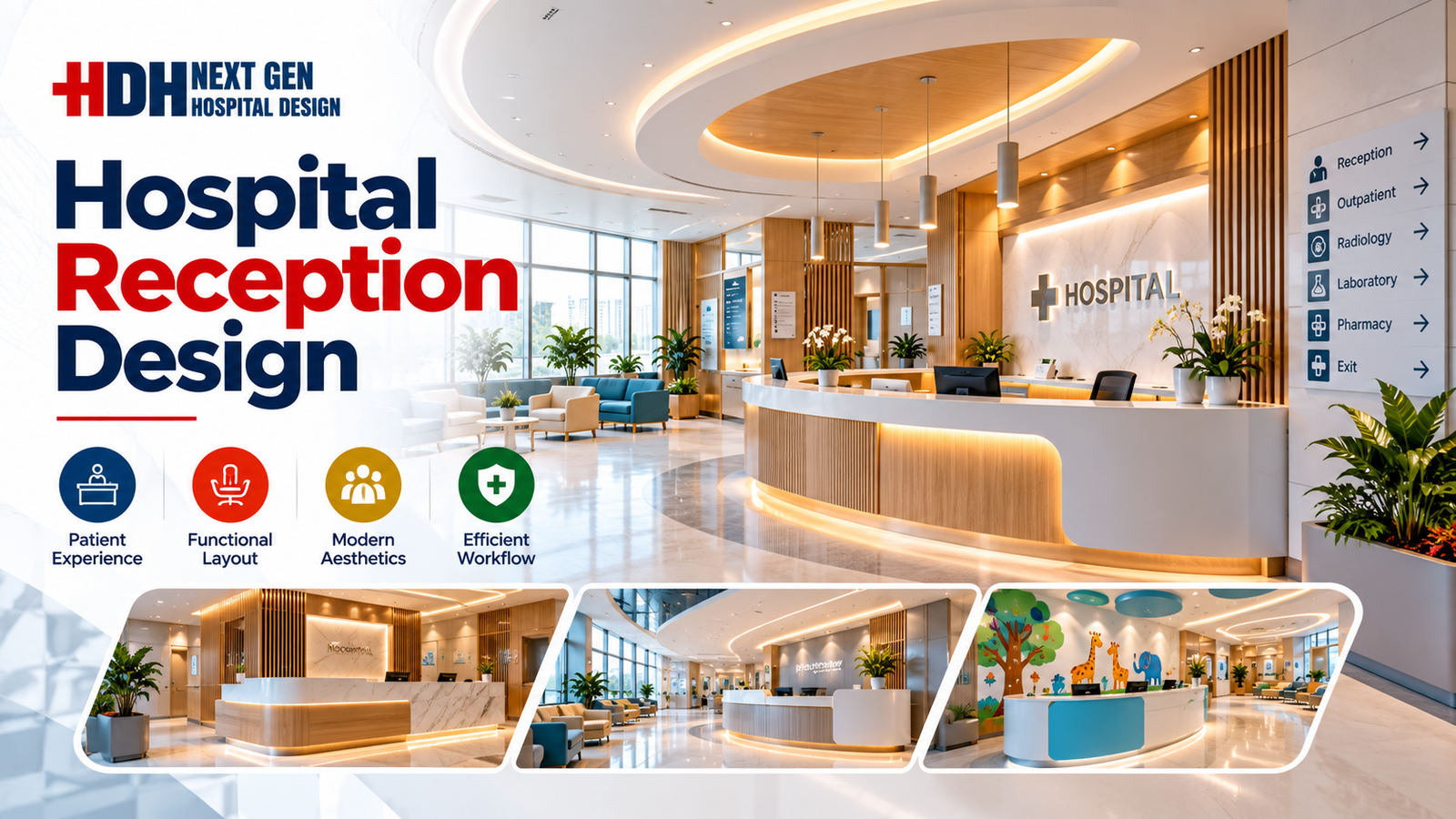
Hospital Reception & Waiting Area Design: Planning Guide for 2027