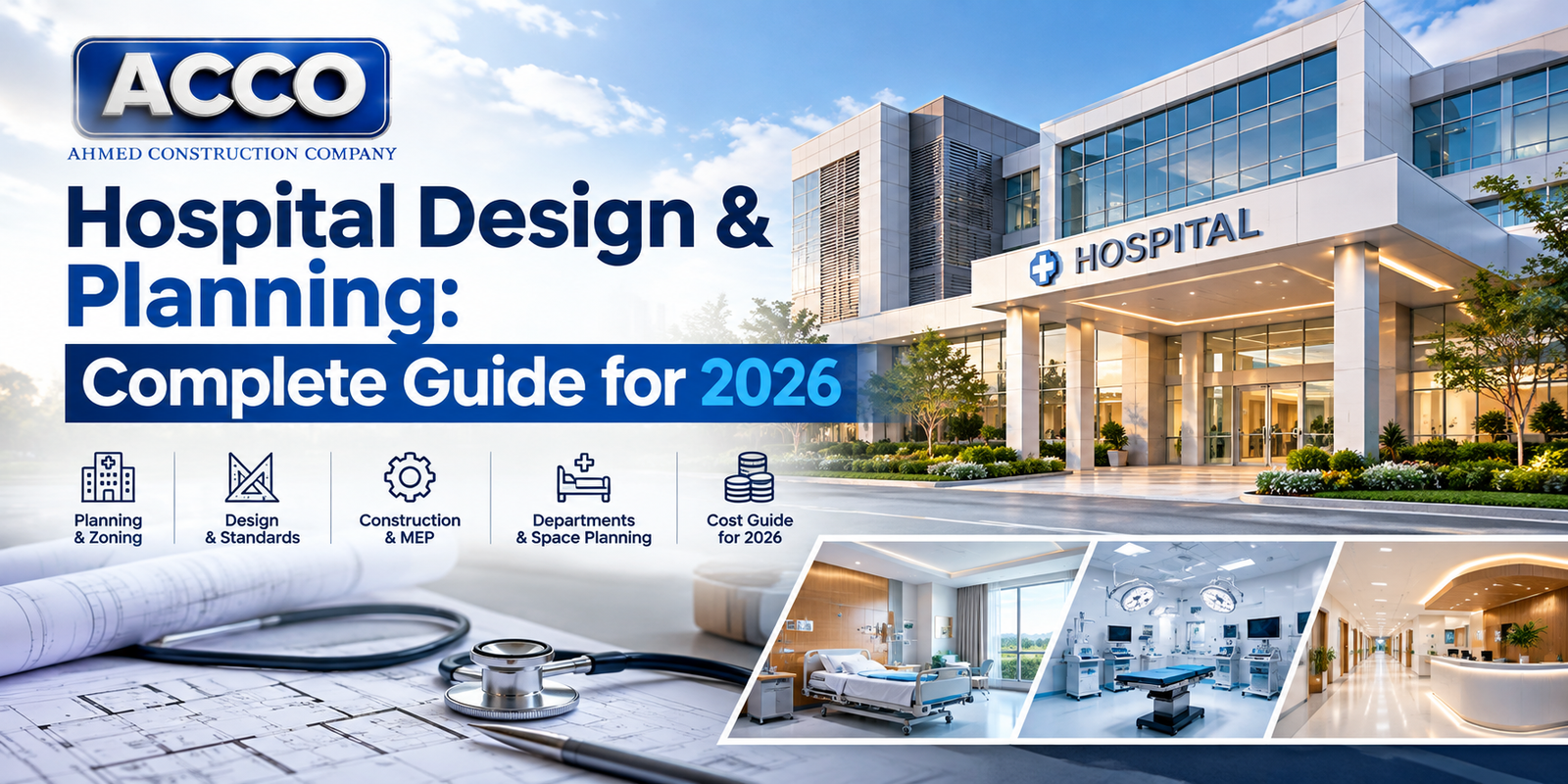

Hospital Demolition & Renovation: Working Safely in Operational Facilities
Safe Renovations: Managing Demolition and Construction in Active Hospitals
Welcome to Hospital Design Hub. Renovating or expanding an operational hospital is a challenging construction task. Unlike empty commercial spaces, a hospital renovation occurs near active patient care zones, operating rooms, and intensive care units. Construction dust, noise, vibration, and water system disruptions can pose health and safety risks to vulnerable patients. To mitigate these issues, healthcare facilities must implement Infection Control Risk Assessment (ICRA) protocols and safety measures. ACCO, Pakistan’s leading healthcare engineering and turnkey construction company, specializes in managing renovations in active healthcare environments. Based in Lahore at Office 2, 3rd Floor, Bigcity Plaza, Gulberg-III, we provide nationwide services, ensuring hospital expansions are executed safely and comply with all regulatory standards.
The Priority of Infection Control During Construction
Construction activities generate dust and mold spores, such as Aspergillus, which can cause serious infections in immunocompromised patients. In addition, vibrations can disrupt sensitive diagnostics, and plumbing modifications can introduce waterborne pathogens like Legionella. To manage these risks, renovations must be planned with physical isolation barriers, air filtration systems, and coordination between construction and clinical teams. This ensures the hospital remains operational and safe throughout the project.
Technical Safety and Dust Containment Protocols (ICRA)
Executing a safe hospital renovation requires adhering to specific safety and containment protocols. ACCO implements these key technical measures in every project:
- Infection Control Risk Assessment (ICRA Class IV): For major renovations in high-risk zones, we apply Class IV containment protocols. This includes building airtight, fire-rated plastic or drywall barriers, setting up anterooms for workers to change protective gear, and maintaining negative air pressure within the work zone using HEPA-filtered air scrubbers to prevent dust leakage.
- Vibration and Noise Monitoring: Construction tools generate vibrations that can affect sensitive equipment like MRIs, CT scans, and laboratory scales. We install real-time vibration sensors near these areas and schedule heavy demolition work during off-peak hours or night shifts.
- Water System Management (Legionella Prevention): Modifying plumbing systems can cause water stagnation and lead to bacterial growth. We implement flush protocols, disinfect newly installed pipes, and avoid creating “dead legs” (unused pipe sections) in the water supply system.
- Debris Control and Dedicated Pathways: Construction waste must be transported safely. We use dust-tight carts, establish dedicated waste routes that avoid patient zones, and use designated service elevators for construction materials.
Comparison of ICRA Classes and Containment Requirements
The level of dust and infection control required depends on the scale of the construction work and the risk level of the adjacent patient areas. The table below outlines the four ICRA classes and their containment strategies:
| ICRA Class | Project Type & Dust Level | Infection Control Risk Level | Required Containment Measures |
|---|---|---|---|
| Class I | Minor maintenance (e.g., replacing ceiling tiles) | Low Risk (Office areas, corridors) | Immediate cleanup, minimize dust, replace tiles promptly |
| Class II | Small-scale work (e.g., painting, minor plumbing) | Medium Risk (Outpatient clinics, general wards) | Water misting to control dust, seal unused doors, wipe surfaces |
| Class III | Moderate construction (e.g., ward renovations) | High Risk (ICU, Emergency, Pediatrics) | Isolate work area with plastic barriers, use HEPA air scrubbers |
| Class IV | Major demolition and reconstruction | Highest Risk (Operating theaters, Oncology wards) | Construct airtight drywall barriers, set up anterooms, maintain negative pressure |
Market Analysis: Compliance Standards and Renovation Costs in Pakistan
Healthcare regulatory bodies, such as the Punjab Healthcare Commission (PHC) and the Sindh Healthcare Commission (SHCC), require hospitals to maintain strict infection control standards, even during renovation work. Failing to isolate construction zones can lead to warnings, fines, or temporary suspension of operating licenses. Implementing proper ICRA containment measures—including plastic barriers, HEPA filters, and safety monitoring—typically adds 15% to 25% to the renovation budget. However, this investment is essential to protect patient health and maintain hospital operations. ACCO’s experienced teams manage these protocols on-site, ensuring safety and compliance throughout the renovation process.
Frequently Asked Questions
1. What is negative pressure in a construction zone and why is it used?
Negative pressure means air is continuously exhausted from the construction zone through HEPA filters, creating a lower pressure environment than the surrounding hospital rooms. This ensures that when doors are opened, clean hospital air flows into the construction area rather than allowing dust and airborne contaminants to escape into patient areas.
2. How do renovations prevent the spread of Aspergillus mold?
Aspergillus is a common mold found in dust and building materials. In healthy individuals, it is harmless, but in immunocompromised patients, it can cause severe lung infections. We prevent its spread by using airtight physical barriers, keeping construction materials sealed, and using HEPA air scrubbers to capture spores before they can spread.
3. What is a “dead leg” in hospital plumbing and why is it a hazard?
A “dead leg” is a section of pipe that is closed off or no longer used, leading to stagnant water. This stagnant water can become a breeding ground for bacteria like Legionella. During plumbing renovations, we ensure all unused pipes are completely removed rather than just capped off.
4. How is construction noise managed near active patient wards?
We manage noise by schedule: planning heavy demolition and drilling during off-peak hours, using electric tools instead of pneumatic ones where possible, and installing temporary sound-absorbing barriers around the work zone to minimize disruption to patients.
Renovate Safely with ACCO’s Construction Management Services
Are you planning to expand or renovate your operational healthcare facility in Pakistan? Partner with ACCO to manage your project with proper infection control and safety standards. Contact our construction management team today to schedule a consultation:
- Phone: +92 322 800 0190 | +923 111 749 849
- Email: info@acco.com.pk
- Website: https://acco.com.pk/
- Office: Office 2, 3rd Floor, Bigcity Plaza, Gulberg-III, Lahore