Turnkey Hospital Projects: Why Single-Source Responsibility Saves Time & Budget
Streamlining Healthcare Construction: The Turnkey Advantage
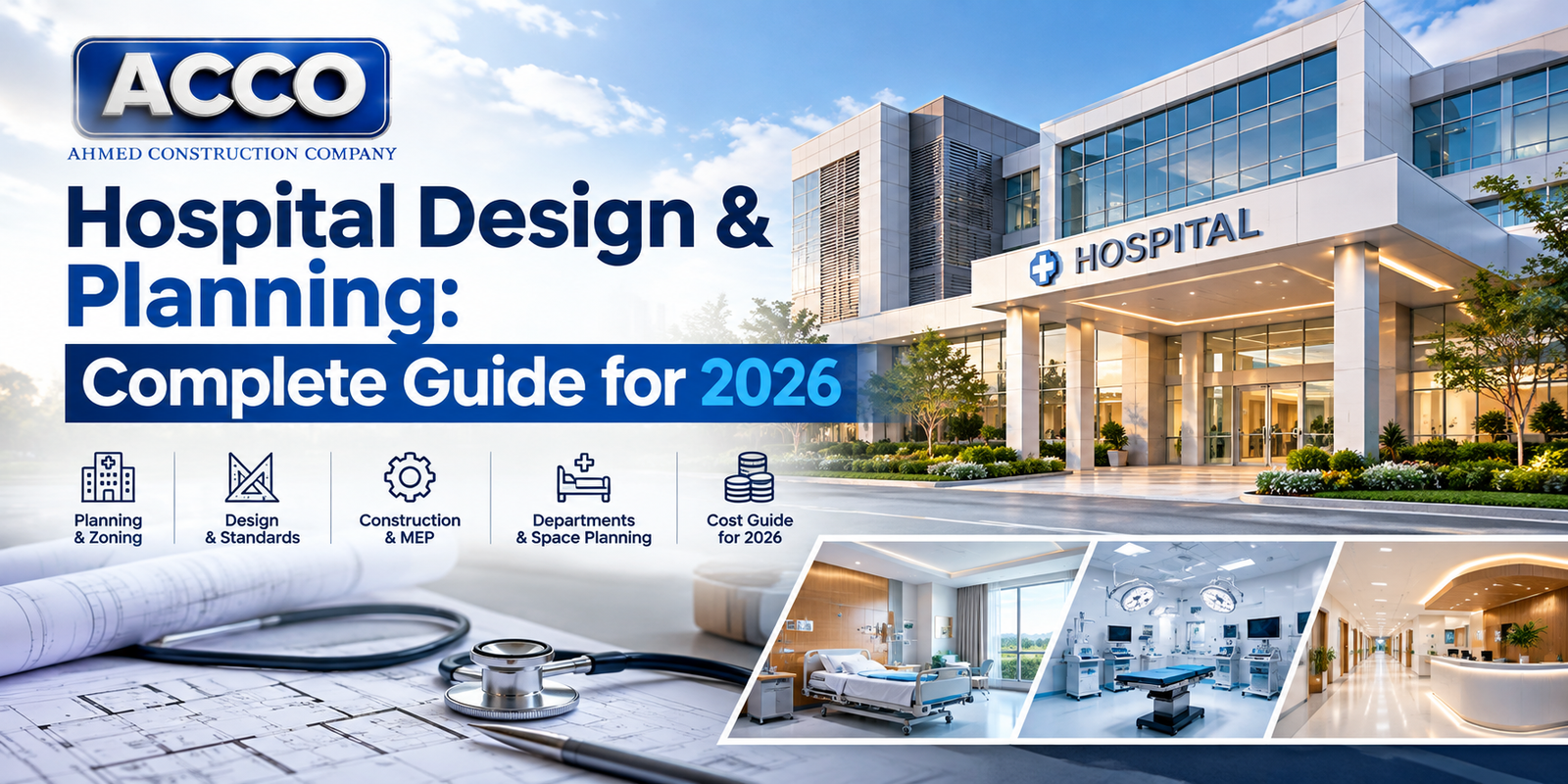
Welcome to Hospital Design Hub. Building a hospital is one of the most complex construction challenges. Unlike standard commercial or residential buildings, a hospital requires integrating advanced architectural design, heavy structural loads, complex mechanical and electrical systems, and specialized clinical layouts. Traditionally, developers hired separate architects, MEP engineers, and contractors, which often led to design conflicts, budget overruns, and project delays. In Pakistan, healthcare facility owners are increasingly turning to turnkey project delivery, also known as Engineering, Procurement, and Construction (EPC), to streamline this process. ACCO, Pakistan’s premier turnkey healthcare construction company, is a leader in this model. Based in Lahore at Office 2, 3rd Floor, Bigcity Plaza, Gulberg-III, we provide nationwide services, serving as a single source of responsibility to deliver fully functional, compliant, and cost-effective hospitals.
The Turnkey (EPC) Model vs. Traditional Design-Bid-Build
In the traditional design-bid-build model, a hospital owner contracts separately with a designer and a general contractor. If a design error is discovered during construction—such as an HVAC duct blocking a medical gas line—the owner is often caught in disputes between the architect and the builder over who pays for the fix. The turnkey model eliminates this issue by placing all design, engineering, procurement, and construction responsibilities under one contract with a single firm. This ensures that the architectural layout, MEP services, and medical equipment requirements are coordinated from the beginning, leading to faster delivery and fewer design changes.
Technical Integration in Turnkey Hospital Projects
The success of a turnkey hospital project relies on coordinating specialized systems during the design phase. ACCO manages this integration across several key areas:
- HVAC and Structural Coordination: Operating theaters require heavy laminar flow systems and thick ductwork. Our structural engineers coordinate with HVAC designers to ensure floor heights allow for duct installation without reducing ceiling clearance. We also plan structural slabs to handle the weight of heavy rooftop air handling units (AHUs).
- Medical Gas Piping (MGPS) and Electrical Integration: We design medical gas lines, electrical cables, and Nurse Call systems together. This ensures that when the bedhead panels and ceiling-mounted medical pendants are installed, all outlets align perfectly without requiring walls to be cut or modified.
- Procurement of Long-Lead Items: Specialty components—such as H14 HEPA filters, hermetic lead-lined doors, copper RF cages for MRIs, and medical-grade flooring—require weeks or months to import. As a turnkey partner, ACCO schedules these purchases early in the design phase, avoiding construction delays.
- Infection Control Layouts: We align spatial flows with clean-to-dirty zoning standards, ensuring the central sterile services department (CSSD) links directly to operating suites via dedicated dumbwaiters or sterile corridors, preventing contamination risks.
Comparison of Project Delivery Models for Pakistani Hospitals
Choosing the right delivery model is critical for project success. The table below compares the traditional design-bid-build approach with the integrated turnkey model:
| Project Metric | Traditional Design-Bid-Build | Turnkey (EPC) Delivery Model | Impact on Hospital Developer |
|---|---|---|---|
| Single Point of Contact | No (Owner manages multiple contracts) | Yes (Single contract with ACCO) | Reduces administrative overhead and disputes |
| Risk of Cost Overruns | High (Due to change orders and design errors) | Low (Guaranteed Maximum Price contracts) | Protects developer budget from market inflation |
| Project Duration | Longer (Sequential phases) | Shorter (Overlapping design & construction) | Accelerates the start of clinical operations |
| MEP & Architectural Integration | Often fragmented, leading to coordination issues | Highly integrated using BIM modeling | Prevents on-site clashes and retrofitting costs |
| Procurement Management | Managed by owner or multiple subcontractors | Centralized global and local sourcing | Ensures equipment matches design specs |
Market Analysis: Financial Planning and Inflation Mitigation in Pakistan
The Pakistani construction sector faces challenges from inflation, currency fluctuations, and import delays. Under the traditional model, a project delay can cause material costs to rise before construction begins. In contrast, the turnkey model allows for bulk procurement of long-lead items at the start of the project, locking in prices and protecting the budget from exchange rate fluctuations. In Pakistan, the cost of turnkey hospital construction ranges from PKR 8,000 to PKR 12,000 per square foot for the grey structure and interior finishes (excluding medical equipment). Partnering with an experienced firm like ACCO can reduce overall project timelines by 25% and save 10% to 15% on the total budget by optimizing construction steps and reducing waste.
Frequently Asked Questions
1. What exactly does “turnkey” mean in hospital construction?
A turnkey hospital project means the contractor manages the entire process from start to finish—including architectural design, engineering, procurement of construction materials and specialized systems, and the construction itself. Once the project is complete, the owner receives the keys to a fully functional, regulatory-compliant facility ready for medical equipment installation.
2. How does the turnkey model help control cost overruns?
Since the design and construction teams work for the same company, design errors are caught and corrected before construction begins. This eliminates the change orders and retrofits that often inflate budgets in traditional projects. Turnkey projects also use fixed-price contracts that protect developers from inflation.
3. What is BIM and how is it used in turnkey projects?
Building Information Modeling (BIM) is a 3D digital design tool. It allows architects, structural engineers, and MEP designers to collaborate on a single digital model of the hospital. This helps identify and resolve system clashes (such as plumbing lines crossing electrical cable trays) before work starts on-site.
4. Can I select my own medical equipment in a turnkey project?
Yes. The developer retains full control over the selection of medical equipment. The turnkey contractor ensures that all utility requirements (such as electrical loads, HVAC cooling, structural supports, and lead shielding) are designed and installed to match the specifications of the chosen equipment.
Build Your Next Hospital with ACCO’s Turnkey Services
Ready to build or expand a healthcare facility in Pakistan? Partner with ACCO to deliver your hospital on time and within budget using our integrated turnkey model. Contact our engineering team today to schedule a consultation:
- Phone: +92 322 800 0190 | +923 111 749 849
- Email: info@acco.com.pk
- Website: https://acco.com.pk/
- Office: Office 2, 3rd Floor, Bigcity Plaza, Gulberg-III, Lahore